
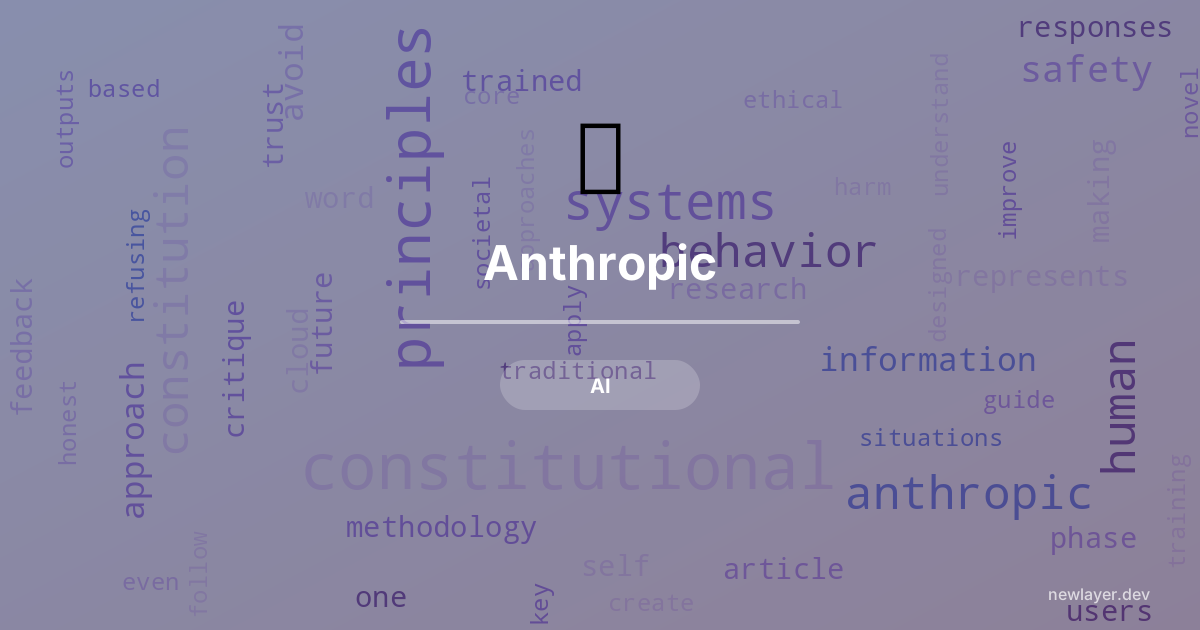
In the rapidly evolving landscape of artificial intelligence, one approach stands out for its innovative approach to AI safety: Anthropic’s Constitutional AI. This methodology represents a fundamental shift in how we train AI systems to be helpful, harmless, and honest.
What is Constitutional AI?
Constitutional AI (CAI) is a training methodology developed by Anthropic that uses a set of principles—a “constitution”—to guide AI behavior. Unlike traditional approaches that rely primarily on human feedback, Constitutional AI aims to create AI systems that can critique and improve their own outputs based on these constitutional principles.
The key innovation is that AI systems are trained not just to follow instructions, but to understand and apply ethical principles autonomously, even in novel situations.
Core Principles of Anthropic’s Constitution
Anthropic’s constitution is built on several foundational principles designed to make AI systems safer and more beneficial:
1. Harmlessness
The AI should avoid causing harm, whether physical, psychological, or societal. This includes refusing to help with dangerous tasks and avoiding content that could be used to harm others.
2. Honesty
The AI should provide accurate information and acknowledge uncertainty. It should avoid making up facts and be transparent about the limitations of its knowledge.
3. Helpfulness
The AI should be genuinely useful to users while staying within ethical boundaries. This means understanding user needs and providing relevant, actionable assistance.
4. Respect for Autonomy
The AI should respect human decision-making and avoid manipulative behavior. Users should make their own informed choices.
5. Fairness and Non-Discrimination
The AI should treat all individuals fairly and avoid reinforcing harmful stereotypes or biases.
How Constitutional AI Works
The Constitutional AI training process consists of two main phases:
Phase 1: Supervised Learning
In this phase, the AI is trained on examples of responses that follow constitutional principles. Human reviewers provide examples of good and bad responses, teaching the AI to distinguish between acceptable and unacceptable outputs.
Phase 2: RLHF (Reinforcement Learning from Human Feedback)
The AI then learns from feedback, but crucially, it’s also trained to critique its own responses against the constitution. This self-critique ability allows the system to improve its behavior even without constant human oversight.
The constitution serves as a north star, guiding the AI’s behavior across countless interactions and edge cases.
Why This Matters
Scalability
Traditional AI safety approaches require extensive human oversight, which doesn’t scale well. Constitutional AI enables systems to apply principles consistently across millions of interactions.
Transparency
Having an explicit constitution makes it easier to understand and audit AI behavior. If we know what principles guide an AI, we can better predict and evaluate its actions.
Adaptability
As societal values evolve, constitutions can be updated to reflect new understanding and priorities, allowing AI systems to adapt without complete retraining.
Trust
Users and developers can have greater confidence in AI systems when they know there’s a clear framework guiding behavior, rather than opaque decision-making processes.
Real-World Applications
Constitutional AI principles influence how Claude handles various scenarios:
- Refusing harmful requests: Declining to help with cyberattacks or dangerous activities
- Providing balanced information: Presenting multiple perspectives on controversial topics
- Acknowledging uncertainty: Being honest when information might be incomplete
- Protecting privacy: Being cautious about handling personal or sensitive information
The Future of Constitutional AI
As AI systems become more powerful, the importance of robust safety frameworks only increases. Anthropic’s constitutional approach represents a significant step toward AI systems that can:
- Self-monitor and self-correct based on principles
- Explain their reasoning in terms of constitutional guidelines
- Navigate novel situations by applying general principles
- Earn public trust through transparent, value-aligned behavior
The constitution isn’t static—it’s designed to evolve through research, public input, and lessons learned from deployment.
Article Word Cloud
Here’s a visual summary of the key concepts discussed in this article:
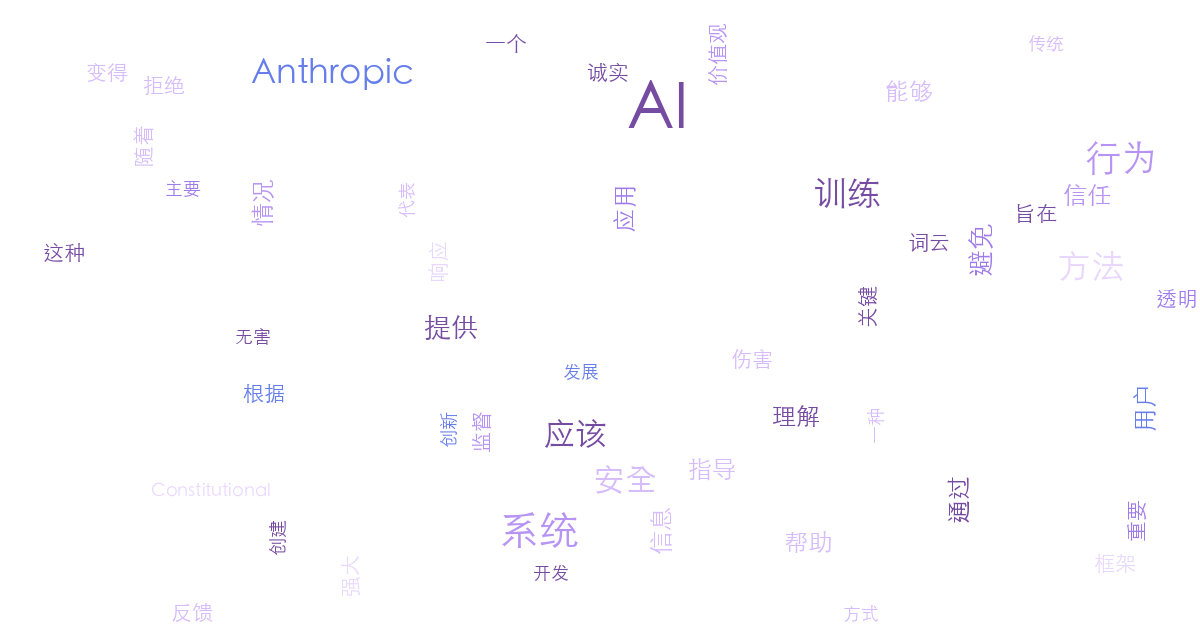
The word cloud above captures the essence of our discussion—Constitutional AI, Anthropic, AI safety, principles, guidelines, and trust all feature prominently, reflecting the core themes we’ve explored.
Conclusion
Anthropic’s Constitutional AI represents a thoughtful approach to one of the most important challenges of our time: how to create AI systems that are both powerful and safe. By grounding AI behavior in explicit principles, we move toward a future where AI can be trusted to act in accordance with human values.
As this methodology continues to develop, it offers a promising framework for ensuring that the benefits of AI are widely shared while minimizing potential harms. The conversation around AI constitutions is just beginning, and it’s one that will shape the future of human-AI interaction.
Further Reading:
This post is part of New Layer’s ongoing exploration of AI safety and alignment research. Stay tuned for more deep dives into the technologies shaping responsible AI development.